

Let’s get this out of the way upfront:
No, not that C word.
I mean Culture - the most underestimated, poorly understood, and conveniently ignored force in every single transformation project I have ever touched.
And as we close out 2025, I’m convinced of one thing more than anything else:
Culture is the root system of every transformation — good or bad.
Everything else (data, process, technology, AI) grows from there.
And yes - I’m saying this even as the person who lives, breathes, and bangs on about data every week.
1. Two Keynotes, One Realisation
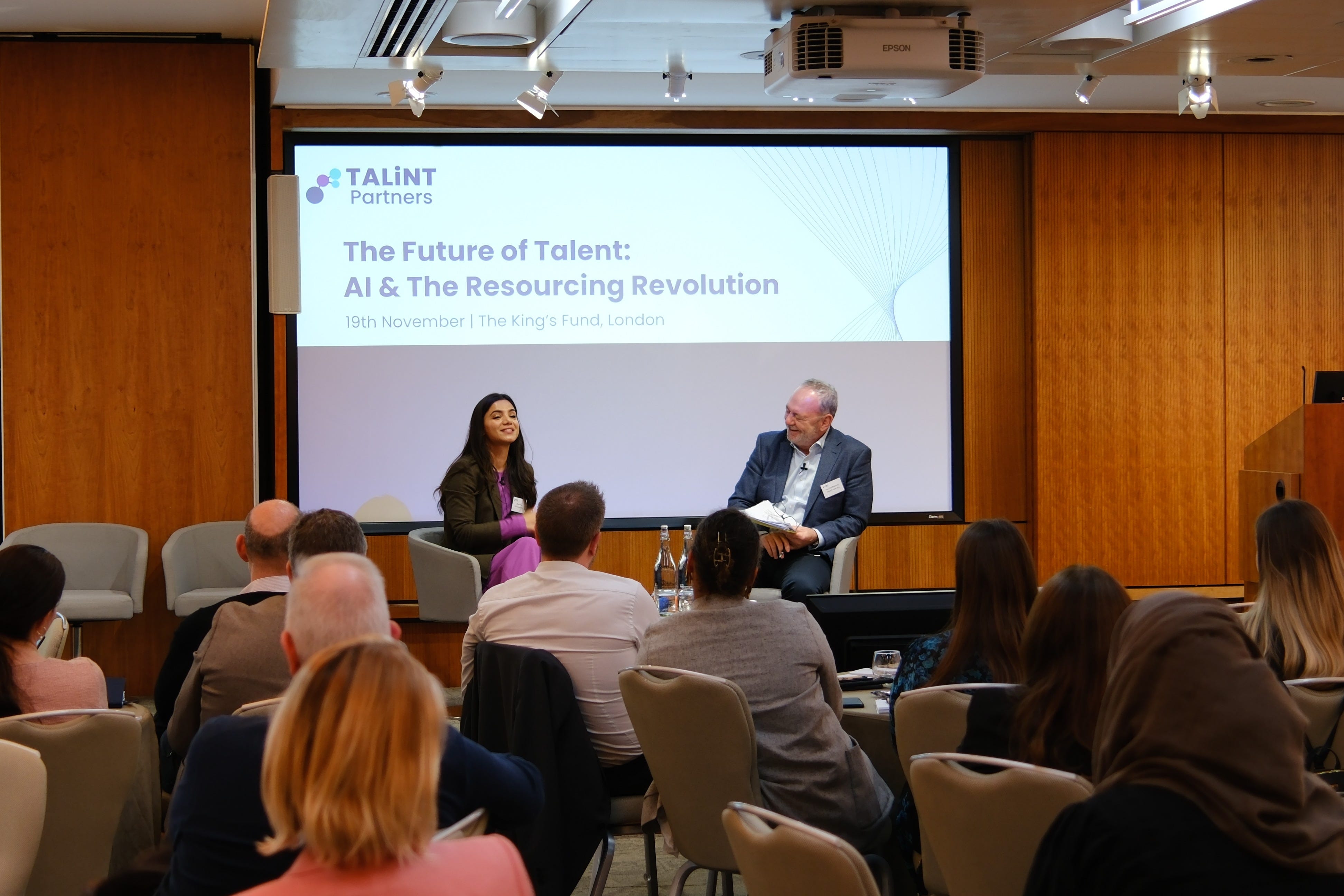
Last week, I had the privilege of speaking at TALiNT Partners’ Future of Talent Conference.
My keynote was about AI Agents – all you need to know! Agent design, decision logic, what “autonomy” actually means, enterprise expectations, governance, ROI, and how to navigate the hype.
But it was the final keynote, delivered by Jo Geraghty, that stayed with me.
Her talk on Six Essential Skills Every Senior Leader Needs in 2026 hit a nerve, not because it contradicted anything I said, but because it exposed the truth hiding underneath all talk of AI, agents, roadmaps, transformation, Accelerators, and shiny promises:
Technology can take you far.
Culture decides whether you stay there.
My keynote was about the tools.
Her keynote was about the humans steering it.
Together, they reveal the real story.
2. Culture: The Root System No One Wants to Talk About
Companies spend hundreds of thousands on process mapping, integrations, AI workshops, Salesforce rebuilds, new ATSs, new CRMs, new tools, new dashboards…
…and still nothing changes.
Why?
Because the root system is rotten.
Because you can have:
the cleanest data model (rare…but we are being hypothetical here ;) )
the slickest UX,
the smartest AI agent design,
the most rigorous discovery,
the clearest governance…
…and your transformation will still fail if the culture rejects accountability, avoids hard conversations, or promotes based on politics over competence.
Culture is happening whether you design it or not.
And if you don’t design it intentionally, it will absolutely design itself — usually in ways that kill performance, stifle progress, and protect the wrong people.
3. Humans Aren’t Automatically Better Than AI
Let’s address the myth of the year:
“Humans must be at the helm.” “Humans must lead.”
Correct - BUT not all humans.
We’ve entered this strange philosophical moment where “human = good” and “AI = risk,” as though organic intelligence automatically comes with emotional maturity, competence, or leadership skill.
It doesn’t.
Competence is not a birthright.
Being human does not make you better than AI.
Just like being good at your job does not make you a good manager.
Throughout my career, I’ve seen:
brilliant salespeople turned terrible sales managers,
fantastic recruiters promoted into roles they never wanted,
individuals in leadership who haven’t had a hard conversation in five years,
managers avoiding decisions because it keeps them “popular,”
senior leaders clinging to relevance instead of rediscovering competency.
And meanwhile, AI agents are over here:
following rules,
making decisions based on data,
improving with feedback,
never confusing tenure with ability.
AI doesn’t threaten good leaders.
It threatens accidental leaders.
4. Why 2026 Makes the Gap Impossible to Ignore
Jo’s point was simple but profound:
Good management is a skill set.
Leadership is a responsibility.
Culture is an outcome.
2026 is the year these collide.
You can no longer lead just humans.
You will lead teams of humans and agents - systems, automations, decision engines, workflows, models.
And this requires:
clarity,
accountability,
consistency,
openness to feedback,
an ability to coach,
comfort with ambiguity.
Most organisations don’t have this.
They have well-meaning people desperately pretending competence is transferable by osmosis.
It’s not.
And AI exposes this gap brutally.
5. Culture Is More Important Than Data (Yes, I Said It)
I can fix broken processes.
I can rebuild systems.
I can rewrite workflows.
I can redesign a CRM.
But I cannot fix a culture that refuses to own the change.
This year, across every project I’ve worked on - from data migrations to candidate journeys to ops transformations, the strongest predictor of success wasn’t:
budget,
resource,
tech stack,
timeline, or
complexity.
It was culture.
Because culture determines:
whether people show up,
whether they learn,
whether they adapt,
whether they collaborate,
whether they get better,
whether they take responsibility.
Data reflects culture.
Process supports culture.
Technology amplifies culture.
Culture leads.
Everything else follows.
6. The C Word for 2026
So here’s my end-of-year parting note:
Your systems, your agents, your data, and your “transformation plans” will not save you.
Not if your culture can’t carry the weight of what you’re trying to build.
Not if leadership is accidental.
Not if managers are unprepared.
Not if accountability is optional.
Not if conflict is avoided.
Not if growth is feared.
Not if change is tolerated rather than embraced.
And definitely not if humans assume they deserve the wheel simply because they are human.
AI won’t replace humans.
But it will absolutely expose the ones who were never meant to lead.
7. Final Thought: Choose Your Culture
Culture is not a vibe.
It’s not a poster.
It’s not an HR strategy.
It’s not a Friday workshop.
It is the daily choices, behaviours, standards, and expectations that determine how your organisation actually works, not how you say it works.
And as we step into 2026:
Your culture is either intentional or accidental - choose.
Have a wonderful end to the year,
and here’s to building cultures worthy of the future we’re creating.
Until next time!
Remember - Less chaos. More BOS
Khyati Pal
Voice of BOS | Business Operations Streamlined